 CraftQuiver
Minecraft Chaos Cubed (26.2): Everything New
Minecraft's Chaos Cubed update (Java Edition 26.2) went live on June 16, 2026, and it's a weird one in the best way. You get a new underground biome, a mob that changes how it moves based on whatever you feed it, geysers that throw you into the sky, two full block families, and the Friends List that Java players have been asking about for years. Here's what's actually worth knowing.
At a glance
A toxic new world below
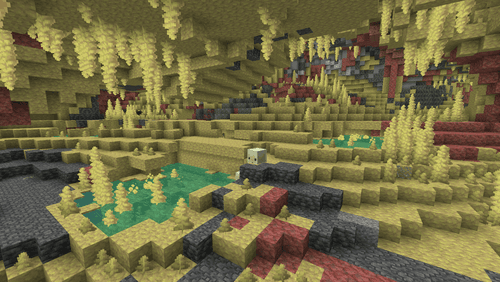
The big new area is the Sulfur Caves, an underground biome laced with bright yellow sulfur and deep-red cinnabar. Check the water pools and you'll find potent sulfur, which is the stuff that powers the update's geysers. You won't be down there alone, either. Sulfur cubes spawn in these caves, and cave spiders turn up too. Where a sulfur cave breaks the surface it forms a Sulfur Spring, and those come in four sizes from small to extra-large. They make a pretty reliable signpost when you're trying to track one down.
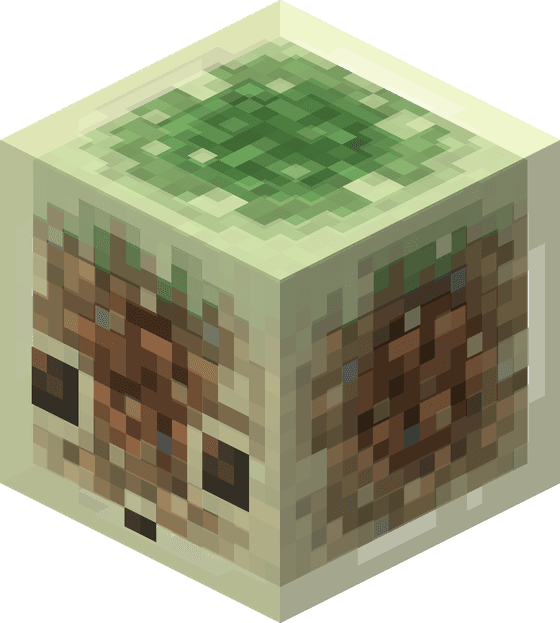
The Sulfur Cube: the block that eats blocks
The sulfur cube is the star of the update, and it's a strange little thing. It's a passive mob with 8 health that picks up whatever block you hand it, and that block completely changes the way it moves. Hold a block, interact with the cube, and it absorbs it. There are twelve archetypes in total, and each one gives it different physics:
Give it wood and it bounces all over the room. Hand it ice and it slides around like it's on a frozen pond. Give it TNT and, well, there's a reason the new “Uh Oh” advancement exists. Kill a large cube and it splits into two smaller ones, and feeding a small one slimeballs grows it back up. Found a cube you like? Scoop it into a Bucket of Sulfur Cube and take it home, or just spawn more with the new spawn egg.

Geysers: launch pads powered by chaos
Potent sulfur has a real use beyond looking good. Put a potent sulfur block on top of a magma block with water above it, and you've built a geyser. Every 50 seconds or so it erupts, and anything caught in the plume gets launched straight up, whether that's you, a mob, or a dropped item. The eruption itself won't hurt you, though the landing is your own problem. Set it up under lava instead of water and it erupts non-stop. More water above the block means a bigger launch, somewhere around seven blocks of plume for each water source. One thing to watch: every eruption puffs out a cloud of noxious gas that gives you nausea, so don't stand around at the top.
Build a geyser
- Drop a magma block at the bottom of a small pool. One block of depth is plenty.
- Put a potent sulfur block right on top of the magma block.
- Stack water source blocks above it. The more water, the higher it throws you.
- Back off and wait. It fires on a short cooldown and launches whatever's inside. (Want it running constantly? Use lava instead of water.)

Sulfur blocks, start to finish
Sulfur shows up as a full building set, the same as any proper stone type. You get the base sulfur block plus stairs, slabs, walls, polished versions, bricks, and a chiseled variant, so you can put together a whole toxic-lab look without borrowing textures from anything else. The caves also grow sulfur spikes, the pointed speleothems that hang from ceilings and poke up out of the floor. Keep an eye on the ones overhead, because they can fall on you. Four spikes craft back into a single sulfur block, and if you'd rather not mine your own, wandering traders sell them now.
Craft the sulfur and cinnabar sets
Both are normal stone-style sets, so the recipes work the way you'd expect: cut them down for slabs and stairs, line them up for walls, and combine them into bricks. You can dig through the recipes in the interactive crafting guide, find more building blocks under Building, and if you're planning something big, the resource calculator will work out exactly how much you need.
Cinnabar: the update's red stone
Cinnabar is the deep-red counterpart to sulfur, and it's the block most people will actually build with. You mine it straight out of the sulfur caves and springs with any pickaxe, and it comes with the same complete set of stairs, slabs, walls, polished cinnabar, bricks, and a chiseled variant. On its own it's purely decorative, but that rich crimson color is genuinely hard to get anywhere else in the game, which makes it a great pick for reds, accents, and anything volcanic. Pair it with sulfur's yellows and you've got a whole palette straight out of the caves.
A built-in Friends List for Java
Java finally has a proper built-in Friends List. You can open it from the title screen or the pause menu, or just hit the new O keybind. From there you send and accept requests, and you can see whether each person is Offline, Online, or already In a world. Requests come in as toasts with the sender's skin on them, and there are privacy settings for who's allowed to add you and how much of your status you share. It sounds like a small thing, but hopping into a friend's world is a lot less of a hassle now.
Experimental Vulkan support
One of the bigger under-the-hood changes is experimental Vulkan support. A new Graphics API option in the video settings lets you switch the game from OpenGL to Vulkan, a more modern graphics backend that can run more efficiently on a lot of hardware. It's still experimental, so it quietly falls back to OpenGL if anything goes wrong, and on macOS it runs through MoltenVK. If you've been chasing frames it's worth a try, just don't be surprised if a mod or two needs to catch up first.
A few other changes
Rounding things out: there's a new music disc, “Bounce” by fingerspit, hidden in mineshaft minecarts down in the sulfur caves, along with five new ambient tracks. Ocelots, piglins, and zombie horses can spawn on Peaceful now, too. The full changelog goes a lot deeper, but that covers the parts most people will actually run into.
Frequently asked questions
When did Minecraft Chaos Cubed release?
Minecraft Chaos Cubed, also known as Java Edition 26.2, released on June 16, 2026 for both Java and Bedrock Edition.
What does the sulfur cube do in Minecraft?
The sulfur cube is a passive mob that absorbs whatever block you give it and changes its physics to match. It has twelve archetypes, so depending on the block it can become bouncy, slippery, sticky, explosive, hot, and more.
How do geysers work in Minecraft?
Place a potent sulfur block on top of a magma block with water above it to make a geyser. It erupts roughly every 50 seconds and launches any players, mobs, or items in the plume upward. More water above the block makes a taller launch, and using lava instead makes it erupt continuously.
What is cinnabar used for in Minecraft?
Cinnabar is a decorative deep-red block mined in the sulfur caves. It comes as a full building set (stairs, slabs, walls, polished, bricks, and chiseled), and its rich red color makes it useful for accents and volcanic builds.
How do you get sulfur in Minecraft?
You mine sulfur blocks with a pickaxe in the sulfur caves and sulfur springs, or craft a sulfur block from four sulfur spikes, which also generate in the caves and are sold by wandering traders.
Ready to build with it?
Dig into recipes, plan your next project, and make the most of Chaos Cubed.
Open the crafting guide